
Your Basket is Empty!
What Is the Legal Tyre Tread Depth in the UK? Everything You Need to Know
Your tyres are the only point of contact between your vehicle and the road, with each tyre touching the surface over an area roughly the size of a postcard. While engine performance, suspension, and braking systems are essential, none of them can perform effectively if your tyres lack sufficient tread. Understanding the legal tyre tread depth in the UK is therefore not just about avoiding fines—it's about ensuring maximum safety, maintaining vehicle performance, and protecting everyone on the road.
At YE CORNER TYRES LTD, we regularly inspect tyres that appear acceptable at first glance but are actually unsafe due to worn tread, uneven wear patterns, or structural damage. This guide explains everything you need to know about tyre tread depth, UK legislation, and why regular tyre inspections are essential.
What Is Tyre Tread?
Tyre tread refers to the patterned rubber surface that makes direct contact with the road. Modern tyres are engineered with carefully designed grooves, sipes, ribs, and tread blocks that perform several critical functions, including:
- Channel water away from the tyre's contact patch
- Improve grip during acceleration and braking
- Enhance steering precision
- Reduce the risk of aquaplaning
- Increase vehicle stability during cornering
- Optimise traction in wet and dry conditions
As tyres wear, these grooves become shallower, significantly reducing their ability to disperse water and maintain road contact.
What Is the Legal Tyre Tread Depth in the UK?
Under UK law, passenger vehicles weighing up to 3,500 kg must have a minimum tread depth of 1.6 mm across the central three-quarters of the tyre's width and around the entire circumference.
This legal requirement applies to:
- Cars
- SUVs
- Vans
- Light commercial vehicles
- Most motorhomes
If any tyre falls below this limit, your vehicle becomes illegal to drive on public roads.
It is important to understand that the legal minimum represents the absolute safety threshold—not the point at which tyres should ideally be replaced.
Why 1.6 mm Is the Legal Limit
The 1.6 mm standard is based on extensive research into tyre performance and road safety. Below this depth, tyres rapidly lose their ability to:
- Displace standing water
- Generate sufficient road grip
- Maintain braking efficiency
- Resist aquaplaning
Testing has shown that braking distances increase considerably once tread depth drops below recommended levels, particularly on wet roads where effective water evacuation becomes critical.
Why Experts Recommend Replacing Tyres Earlier
Although the legal limit is 1.6 mm, many tyre manufacturers and road safety organisations recommend replacing tyres when tread reaches approximately 3 mm.
The reason is simple: between 3 mm and 1.6 mm, tyre performance deteriorates much faster than many drivers realise.
Benefits of replacing tyres around 3 mm include:
- Shorter wet braking distances
- Better steering response
- Improved cornering grip
- Enhanced fuel efficiency
- Reduced aquaplaning risk
- Greater overall driving confidence
Waiting until tyres reach the legal limit often means driving with significantly compromised wet-weather performance.
How Tyre Tread Improves Safety
Modern tyres are sophisticated engineering products. The grooves in the tread continuously remove water from beneath the tyre, allowing the rubber compound to maintain contact with the road.
When tread depth decreases:
- Water cannot escape efficiently.
- The tyre begins to ride on a thin layer of water.
- Steering becomes less responsive.
- Braking distances increase.
- Vehicle control is reduced.
This phenomenon is known as aquaplaning, one of the leading causes of wet-weather accidents.
Even advanced safety technologies such as ABS, traction control, and electronic stability control cannot compensate for tyres with insufficient tread depth.
Understanding Tyre Wear Indicators
Every modern tyre includes built-in tread wear indicators. These are small raised rubber bars located within the main circumferential grooves.
When the surrounding tread wears level with these indicators, the tyre has reached approximately 1.6 mm and should be replaced immediately.
Many tyres also include markings on the sidewall labelled:
- TWI
- Triangle symbols
- Manufacturer-specific wear indicators
These markings help drivers quickly locate the wear bars.
How to Check Tyre Tread Depth
Regular tyre inspections only take a few minutes.
Use a Tread Depth Gauge
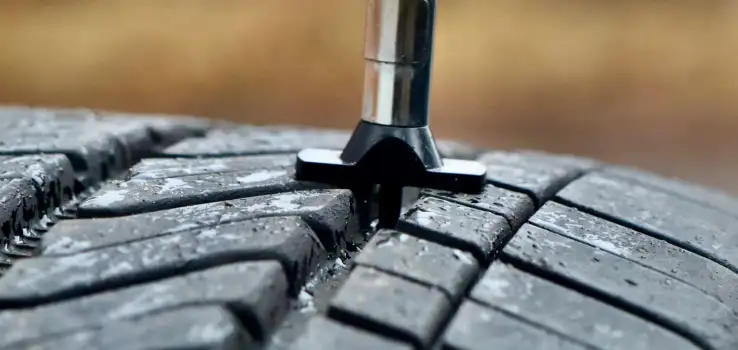
A calibrated tread depth gauge provides the most accurate reading. Measurements should be taken at several positions across the tyre to identify uneven wear.
Inspect Multiple Locations
Check:
- Inner shoulder
- Centre
- Outer shoulder
Uneven readings may indicate suspension or alignment issues.
Examine the Entire Circumference
Inspect the tyre all the way around, as wear is not always consistent. Professional inspections often reveal isolated worn areas that drivers overlook.
Uneven Tyre Wear Can Be a Bigger Problem
Sometimes tyres still meet the legal tread depth but remain unsafe due to irregular wear patterns.
Common causes include:
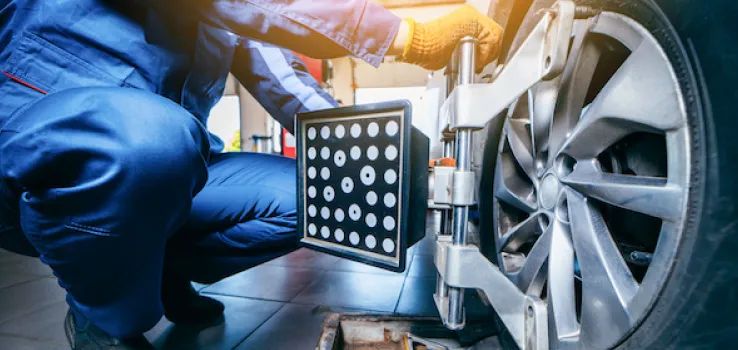
- Incorrect Wheel Alignment: Poor alignment causes excessive wear on either the inner or outer shoulder.
- Incorrect Tyre Pressure: Over-inflation wears the centre of the tread, while under-inflation wears both shoulders.
- Suspension Problems: Damaged suspension components create uneven tyre loading and abnormal wear.
- Wheel Balancing Issues: Imbalanced wheels can produce cupping or scalloped tread wear.
These problems shorten tyre life while reducing handling and braking performance.
What Happens If You Drive with Illegal Tyres?
Driving with tyres below the legal tread limit carries significant consequences.
Drivers may face:
- A fine of up to £2,500 per illegal tyre
- Three penalty points per tyre
- Vehicle prohibition notices
- MOT failure
- Increased insurance complications following an accident
With four illegal tyres, penalties can become extremely severe—up to £10,000 in fines and 12 penalty points. More importantly, worn tyres place both the driver and other road users at unnecessary risk.
How Tread Depth Affects Braking Performance
Tyre tread has a direct influence on stopping distances. In dry conditions, worn tyres may still provide acceptable grip. However, in wet conditions, braking performance deteriorates rapidly.
The deeper tread channels more water away from the contact patch, allowing the tyre to maintain maximum friction with the road surface.
As tread depth decreases, the available grip reduces dramatically, increasing stopping distances and reducing driver control during emergency braking.
Regular Tyre Inspections Save Money
Replacing tyres before they become excessively worn offers several long-term benefits:
- Longer tyre life through early alignment correction
- Reduced fuel consumption
- Improved ride comfort
- Better handling
- Increased safety
- Lower maintenance costs
Routine inspections can also identify punctures, sidewall damage, ageing rubber, and manufacturing defects before they become dangerous.
Professional Tyre Inspections Matter
While drivers should regularly check their own tyres, professional inspections provide a much more comprehensive assessment.
At YE CORNER TYRES LTD, our technicians inspect:
- Tread depth
- Tyre pressures
- Sidewall condition
- Valve integrity
- Wheel alignment
- Tyre age
- Uneven wear patterns
- Overall tyre safety
Early identification of tyre problems often prevents more expensive repairs and improves overall vehicle performance.
Final Thoughts
Tyre tread depth is one of the most important aspects of vehicle safety. Although UK law sets the minimum legal tread depth at 1.6 mm, responsible vehicle maintenance means replacing tyres before they reach this limit, particularly if you frequently drive in wet conditions.
Regular inspections, correct tyre pressures, routine wheel alignment, and timely tyre replacement all contribute to safer driving, improved handling, and lower running costs. If you're unsure about the condition of your tyres, it's always best to have them inspected by experienced professionals.
YE CORNER TYRES LTD provides expert tyre inspections, premium replacement tyres, wheel alignment, puncture repairs, and professional fitting services from our garage at 176 Rickmansworth Road, Watford WD18 7JS. Whether you need advice on tyre safety, a tread depth inspection, or a complete tyre replacement, our experienced team is here to help keep your vehicle safe, legal, and performing at its best. Contact us by phone at Call Us or email at [email protected] to book a tyre inspection today.
Recent Blogs