

Your Basket is Empty!
How Often Should You Service Your Car? A Complete UK Maintenance Guide
Routine vehicle servicing is one of the most effective ways to maintain reliability, optimise performance, and extend the lifespan of your car. While modern vehicles are equipped with advanced onboard diagnostics and service interval indicators, regular servicing remains essential for detecting wear before it develops into expensive mechanical failures.
Many motorists assume that servicing is only necessary when a warning light appears or when the vehicle develops a fault. In reality, preventative maintenance is significantly more cost-effective than reactive repairs. A well-maintained vehicle not only performs better but also offers improved fuel efficiency, enhanced safety, lower emissions, and higher resale value.
At YE CORNER TYRES LTD, we provide professional vehicle servicing using manufacturer-approved procedures, quality replacement parts, and advanced diagnostic equipment. This guide explains how often you should service your vehicle, what is included during a service, and why regular maintenance is critical for modern vehicles.
Why Is Regular Car Servicing Important?
A modern vehicle contains thousands of moving components that operate under high temperatures, pressure, and constant mechanical stress. Engine oil degrades over time, filters become restricted, brake components wear, and fluids gradually lose their protective properties.
Regular servicing helps to:
- Improve engine efficiency
- Reduce mechanical wear
- Increase fuel economy
- Extend engine life
- Maintain braking performance
- Improve vehicle reliability
- Reduce emissions
- Detect faults before they become serious
- Maintain manufacturer warranty requirements
- Increase resale value
Unlike an MOT, which only confirms that a vehicle meets the minimum legal safety standards, servicing focuses on maintaining the vehicle's overall mechanical health.
How Often Should You Service Your Car?
There is no single servicing schedule suitable for every vehicle. Service intervals depend on several factors, including manufacturer recommendations, driving style, vehicle age, fuel type, and operating conditions.
As a general guide, most vehicles in the UK should be serviced:
- Every 12 months, or
- Every 10,000 to 12,000 miles, whichever comes first.
Some manufacturers recommend longer intervals of up to 20,000 miles, while vehicles used for demanding driving conditions may require more frequent servicing.
You should also consider shorter service intervals if you regularly:
- Drive in heavy stop-start traffic
- Make frequent short journeys
- Tow trailers or caravans
- Carry heavy loads
- Drive in extremely hot or cold weather
- Operate in dusty environments
These conditions accelerate wear on engine oil, brakes, suspension, and other critical components.
Types of Car Service
Professional garages generally offer three main servicing options depending on vehicle usage and maintenance history.
Interim Service
An interim service is recommended every six months or approximately 6,000 miles for high-mileage drivers.
Typical inspections include:
- Engine oil replacement
- Oil filter replacement
- Brake inspection
- Tyre condition and pressures
- Fluid level checks
- Battery inspection
- Lighting inspection
- Windscreen wipers
- Steering inspection
- Suspension visual checks
This service is ideal for vehicles covering significant annual mileage.
Full Service
A full service is usually carried out every 12 months.
It includes everything from an interim service together with additional inspections of:
- Air filter
- Cabin pollen filter
- Fuel filter (where applicable)
- Spark plugs (where required)
- Cooling system
- Drive belts
- Exhaust system
- Wheel bearings
- Suspension components
- Electrical systems
A full service provides a comprehensive assessment of the vehicle's overall condition.
Major Service
A major service is generally recommended every 24 months or according to the manufacturer's maintenance schedule.
Additional work may include:
- Brake fluid replacement
- Spark plug replacement
- Fuel filter replacement
- Transmission fluid inspection
- Timing belt inspection
- Coolant replacement
- Detailed engine inspection
- Advanced diagnostics
Major servicing helps maintain long-term vehicle reliability and prevents expensive repairs.
What Happens During a Professional Car Service?
A professional vehicle service involves far more than simply replacing engine oil.
Technicians carry out detailed inspections of multiple systems, including:
Engine Lubrication System
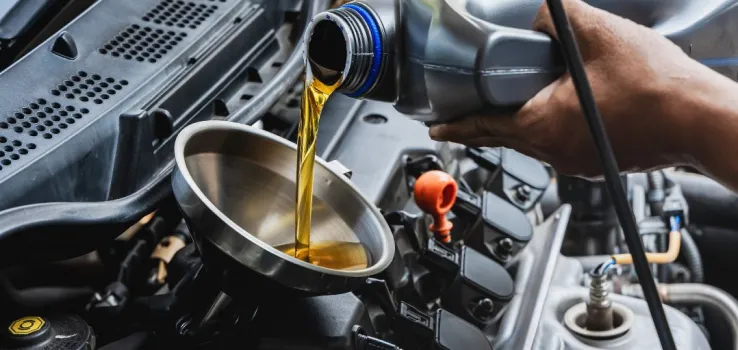
Fresh engine oil reduces friction, removes contaminants, and protects moving engine components from excessive wear.
Old oil loses viscosity and gradually becomes contaminated with carbon deposits, reducing its ability to protect the engine.
Replacing both the engine oil and oil filter is one of the most important aspects of routine servicing.
Brake System Inspection
Brakes are inspected for:
- Pad thickness
- Disc wear
- Brake fluid condition
- Hydraulic leaks
- Brake pipe corrosion
- Caliper operation
Early identification of brake wear helps prevent more costly repairs and maintains safe stopping performance.
Suspension and Steering
Technicians examine:
- Shock absorbers
- Coil springs
- Ball joints
- Suspension bushes
- Steering rack
- Track rod ends
Worn suspension affects handling, tyre wear, and braking performance.
Tyres and Wheel Alignment
Tyres are inspected for:
- Tread depth
- Uneven wear
- Sidewall damage
- Correct inflation pressures
Uneven tyre wear often indicates incorrect wheel alignment or suspension problems.
Maintaining proper alignment improves handling, extends tyre life, and reduces fuel consumption.
Battery and Charging System
Modern vehicles depend heavily on electrical systems.
Technicians inspect:
- Battery voltage
- Charging output
- Starter performance
- Battery terminals
Weak batteries are one of the leading causes of vehicle breakdowns, particularly during colder weather.
Engine Diagnostics
Many modern vehicles contain dozens of electronic control modules monitoring engine performance.
Diagnostic equipment identifies stored fault codes relating to:
- Engine management
- Fuel injection
- Ignition
- Emissions
- Sensors
- Turbochargers
Early diagnosis often prevents larger mechanical failures.
Why Manufacturer Service Schedules Matter
Vehicle manufacturers invest thousands of hours developing maintenance schedules specific to each engine and model.
Following these recommendations ensures:
- Correct fluid replacement intervals
- Appropriate filter replacement
- Component longevity
- Warranty compliance
- Optimum engine performance
Ignoring recommended service intervals may reduce engine lifespan and negatively affect resale value.
Signs Your Car May Need Servicing Sooner
Even if your next scheduled service is months away, certain symptoms should never be ignored.
These include:
- Dashboard warning lights
- Reduced fuel economy
- Engine hesitation
- Unusual engine noises
- Brake squeal
- Steering vibration
- Excessive exhaust smoke
- Fluid leaks
- Rough idling
- Difficulty starting
Prompt inspection helps prevent small problems becoming major repairs.
Benefits of Routine Vehicle Servicing
Regular servicing offers significant long-term advantages.
These include:
- Improved Reliability: Routine maintenance reduces the likelihood of unexpected breakdowns.
- Better Fuel Economy: Fresh oil, clean filters, and correctly inflated tyres reduce engine load and improve efficiency.
- Lower Repair Costs: Preventative maintenance identifies wear before expensive failures occur.
- Increased Vehicle Safety: Servicing ensures braking, steering, suspension, and tyres continue operating safely.
- Higher Resale Value: A documented service history demonstrates responsible ownership and increases buyer confidence.
Professional Servicing vs DIY Maintenance
Basic maintenance such as checking tyre pressures, topping up washer fluid, or inspecting tread depth can be performed by vehicle owners.
However, modern vehicles require specialist equipment to:
- Reset service indicators
- Read diagnostic fault codes
- Inspect electronic systems
- Test emissions
- Measure battery performance
- Check suspension geometry
Professional servicing ensures all work is completed according to manufacturer specifications using the correct tools, approved lubricants, and quality replacement parts.
Final Thoughts
Regular servicing is one of the best investments you can make in your vehicle. Rather than waiting for problems to develop, following a structured maintenance schedule helps preserve engine performance, improve fuel efficiency, reduce emissions, enhance safety, and minimise long-term repair costs. Whether your vehicle is used for daily commuting, business, or family travel, preventative servicing ensures it continues to perform reliably in all driving conditions.
At YE CORNER TYRES LTD, we offer professional vehicle servicing tailored to your manufacturer's recommendations. From engine oil and filter changes to brake inspections, diagnostics, wheel alignment, and comprehensive mechanical health checks, our experienced technicians use modern equipment and high-quality parts to keep your vehicle operating at its best. Visit our garage at 176 Rickmansworth Road, Watford WD18 7JS, or get in touch by phone at Call Us or email at [email protected] to discuss your servicing options and book an appointment.
Recent Blogs